MP3Juice Online Music Search and Download Guide

At a glance
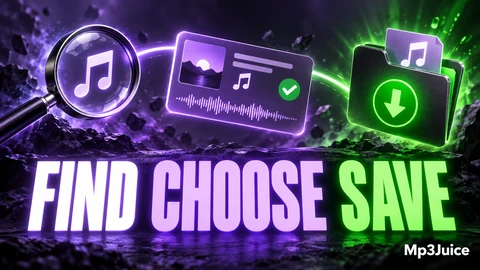
Use a recording identity card: title, performer, version, and source. Search with the strongest clue, compare result details and previews, choose MP3 or MP4 through the Download option, then confirm the saved file matches the recording you intended.
In this guide
A first search works best when you describe the recording, not just the song. Build a simple identity card with four clues: the title, the performer, the intended version, and the source you trust. On MP3Juice, that card helps you decide what to type, which result to compare, and what file you have actually saved.
The homepage search box accepts a song title, an artist name, or an individual YouTube URL. That means you can begin broadly with words, or start from a specific clip when you already know the source. The goal is not to collect every possible match. It is to recognize the one recording you meant to find.
Start With a Recording Identity Card
A title alone is often too weak. Many recordings share titles, and one song can exist as a studio cut, live performance, acoustic take, remix, cover, reissue, short edit, or video upload. Album art and a familiar title can help you notice a result, but they cannot prove that the recording is the exact one you intended.
Before searching, write a compact identity card:
- Song: the title as you know it, including original spelling and accents if relevant.
- Performer: the main artist, group, featured performer, or credited vocalist.
- Version: words such as studio, live, acoustic, remix, radio edit, remaster, session, or a known edition.
- Source: a specific YouTube URL, a release year you associate with the version, or another clue that separates it from nearby results.
These details are text clues, not guaranteed filters. Adding a year or the word “acoustic” can guide the search, but it does not force the results to contain only that edition. Upload dates, original release dates, and reissue dates can also differ, so treat dates as supporting evidence rather than proof.
Choose the Best Starting Query
If you only know the song and performer, start with both together. If the version matters, add the clearest distinguishing word. If you already have an individual YouTube URL for the exact performance, paste that instead of describing it in words. A direct URL can be the cleanest starting point when the source is already chosen.
Using the Paste control may request clipboard permission from your browser. If you do not want to grant that permission, or if the prompt does not appear as expected, manual paste still works. The important part is that the search field receives the title, artist, or URL you intend to submit.
Original spelling and Unicode characters are preserved in queries, so do not remove meaningful accents or non-Latin characters merely to simplify typing. If the artist or title is commonly written in a particular script, that spelling may be the best identity clue.
For a deeper look at building search phrases, use How to Search for Music with MP3Juice. For this guide, keep the first query focused: one recording, one set of clues, one decision.
Choose an Input From What You Know
The right route depends on how much you already know. Use this table to choose a starting point without turning the process into a long tutorial.
| What you know | Best starting input | Why this route helps | What to check next |
|---|---|---|---|
| Only the song and performer | Title plus artist name | It reduces unrelated matches that share the title. | Compare performer names and preview if available. |
| A specific edition or mix | Title, artist, and version word | The added word helps separate live, remix, acoustic, or edit versions. | Look for the same version wording in the result title. |
| A known performance clip | Individual YouTube URL | The source is already identified, so you avoid guessing from title matches. | Confirm the result belongs to that clip before choosing a format. |
| Uncertain release history | Title, artist, and one date clue | A year can help, but it may refer to upload, release, or reissue timing. | Use the year as a clue, not as final proof. |
The plain reason behind this approach is that every extra clue should answer a real question. Add the performer when the title is common. Add the version word when multiple recordings exist. Add a URL when you already know the source. Avoid piling on random terms that make the query less clear.
Example: Finding the Intended Version
Imagine a fictional song called Glass Harbor by a fictional performer, Mara Vale. You want the 2019 acoustic studio version, not a concert upload and not a later electronic remix. A useful identity card would read:
- Song: Glass Harbor
- Performer: Mara Vale
- Version: acoustic studio version
- Source clue: 2019, if that is how you recognize the recording
A practical first query would be Glass Harbor Mara Vale acoustic 2019. If the results show several entries, do not assume the first one is correct. Check whether the title line contains “acoustic,” whether the performer name matches, and whether a preview is available. If a result says “live at North Pier” or “club remix,” it may still be the same composition, but it is probably not the recording you described.
If you later find the exact YouTube clip for the fictional acoustic version, the individual URL becomes a stronger starting point than a text query. That is because the source clue has moved from descriptive words to a specific item.
Compare Results Before Choosing
After a search, the results heading keeps the searched query, while the input field becomes empty. This is normal, but it can surprise first-time visitors. If you are comparing several versions, keep your identity card nearby so you can refine the next query without relying on the cleared input box.
Each visible result is only a candidate. Availability varies, and a visible option is not the same as a completed local download. When a Play control is available, use it to check whether the audio matches the performance you expected. A short preview can reveal a cover version, a live crowd intro, a remix tempo, a spoken segment, or the wrong vocalist faster than title text alone.
The results Download opens MP3 and MP4 choices. This matters because the word “Download” on the result is not the final saved file by itself. It is the point where you choose the format route. If you want a broader walkthrough of locating and saving individual songs, see How to Find and Download Songs with MP3Juice.
Choose MP3 or MP4 by the Recording You Need
Choose MP3 when your intended outcome is an audio file. Choose MP4 when the video is part of what you are trying to keep, such as a performance clip, dance routine, visual session, or music video. The distinction is simple: MP3 is audio only, while MP4 usually includes video along with audio.
If you are not sure what an MP3 file is, what is an mp3 file explains the format separately. This page only needs the practical choice: use MP3 for listening, use MP4 when the visual recording matters.
After choosing Download MP3 or Download MP4, an download panel loads below the selection. Continue from that widget only when it matches the format you intended. A separate Download Now link may also appear, but it is promotional. For the recording route described here, the Download control is the relevant path because it shows the MP3 and MP4 choices tied to the selected result.
If your task specifically begins with a YouTube clip and you want the audio route, YouTube to MP3 is the more direct internal path to consider.
Recognize the File You Actually Saved
A completed save should leave you with a local file, not merely an open page, a visible button, or a conversion panel. The file name may not contain every identity-card clue, so check it before you move on. If the name is vague, add clear personal labeling in your own file manager, such as the title, performer, and version. Do not rely on cover art alone to identify the recording later.
For the fictional example above, a useful personal label might be Glass Harbor - Mara Vale - acoustic 2019.mp3. The point is not to create a perfect catalog system. It is to preserve the clues that helped you choose the right result in the first place.
When you are saving several individual recordings, repeat the same identity-card process for each one. No playlist or bulk-download function is part of this route. Treat each song or clip as its own locating, choosing, and saving decision.
For a slower, screen-by-screen explanation, use How to Use MP3Juice Step by Step. For this guide, the essential habit is simple: identify the recording before searching, compare before choosing, and confirm the saved file before assuming the task is finished.