MP3Juice Music for Offline Listening
At a glance
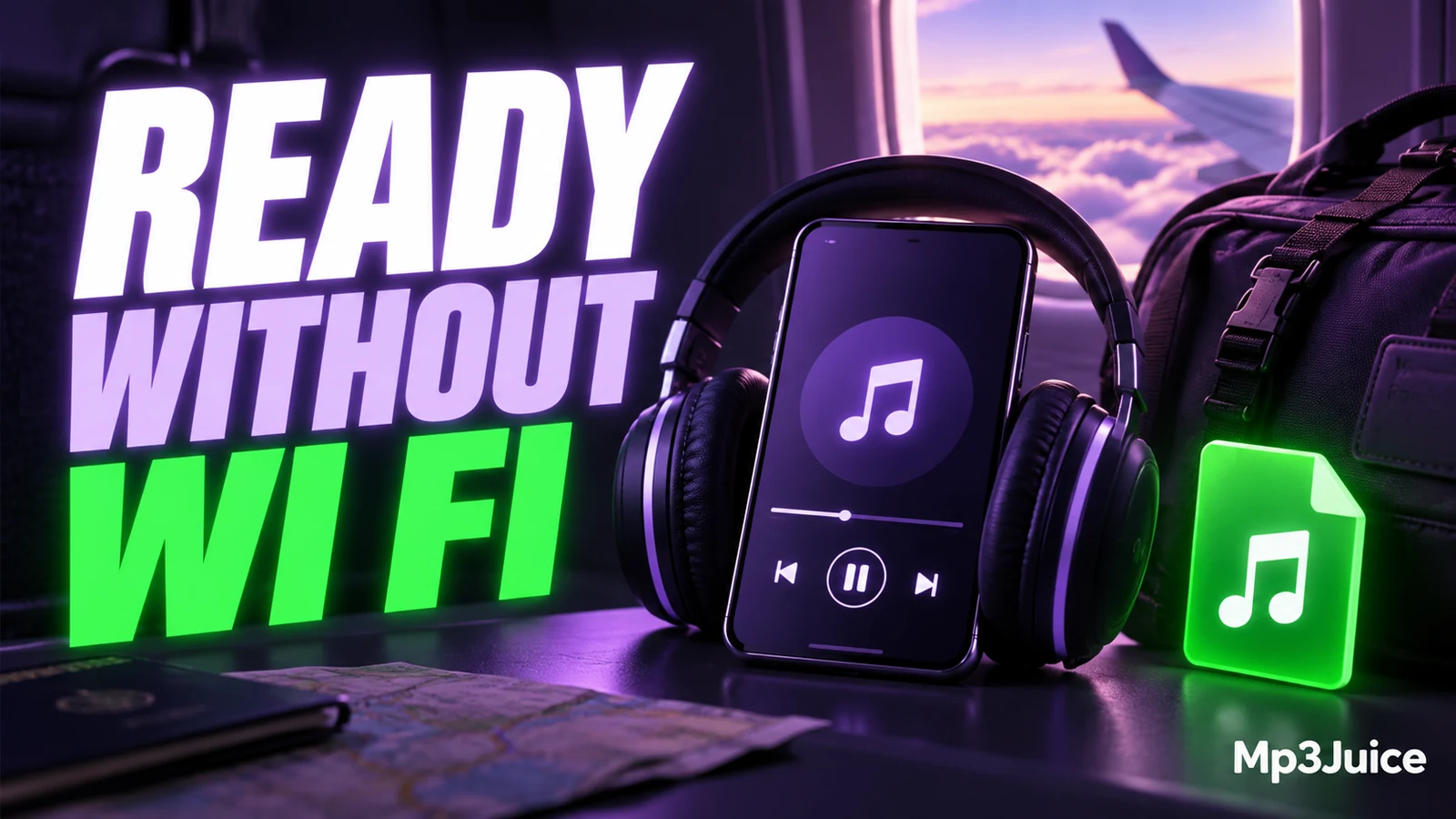
Offline music is ready only after the file is fully saved, stored locally, playable in a compatible app, and tested with the network off. Do not rely on search pages, previews, visible buttons, or cloud placeholders when preparing for travel.
In this guide
Offline listening works only when the music has been saved as a complete local file and tested before the trip. A search page, preview, visible download choice, or cloud file name is not enough. You can use MP3Juice to search by song title, artist, or an individual YouTube URL, but travel readiness begins after the result appears: confirm the file is finished, stored on the device, playable in a local player, and able to start with the network turned off.
The common trip failure is simple. A track looks available in a browser, Files app, or cloud folder, so the listener assumes it will work on a plane, train, ferry, or remote road. Later it will not open because it was only a placeholder, an unfinished download, the wrong format, or a file the chosen player cannot handle. A short offline checklist prevents that problem.
What Offline Ready Means
A result is only a starting point. The search box accepts a song title, artist name, or individual YouTube URL. If you paste a link, the browser may request clipboard permission; manual paste is still an option. After searching, the results heading may keep the searched query while the input becomes empty, so an empty input field after a search does not automatically mean the search failed.
When a result appears, the Download control opens MP3 and MP4 choices. MP3 is the normal choice for audio listening, while MP4 is for video. Play may preview a result when available, but preview playback is not proof that anything has been saved. After choosing Download MP3 or Download MP4, an download panel can load below the selection to continue the file process. A separate Download Now link is promotional, so do not confuse it with the result’s Download control.
Availability varies from result to result. Also, finding a result does not by itself grant permission to copy it. For trip preparation, the practical question is narrower: do you have a complete local audio file that opens without an internet connection?
Offline Trip Checklist
- Finish the file. Do not stop at the result page, a preview, or a visible download option. Continue until the file has completed saving on your device.
- Find the real storage location. In Chrome, check Downloads or Download history, then note the saved folder. On iPhone or iPad, look in Files under the configured Downloads location, often iCloud Drive or On My iPhone.
- Confirm it is not a cloud placeholder. A title shown in a cloud folder does not always mean the file is physically on the device. If it shows a cloud indicator or opens only when online, make it available locally before departure.
- Use a compatible local player. A saved MP3 is not automatically imported into Apple Music. You need a file app or audio player that can open the file from local storage.
- Check the recording and format. Choose MP3 for audio or MP4 for video during the download process. Renaming
.mp4to.mp3does not convert the file. - Test headphones. Wired headphones need the right jack or adapter. Bluetooth headphones should be paired, charged, and tested with the same device you will carry.
- Run an airplane-mode trial. Turn on Airplane Mode, make sure Wi-Fi and mobile data are off, then play the file from the local folder or player.
Cloud Placeholder Failure and Remedy
Consider a fictional example. Lena prepares three fictional tracks for a weekend train ride: “Harbor Lantern” by North Vale Trio, “Glass Orchard” by Mira Solen, and “Blue Ticket Home” by The Paper Signals. On her iPhone, all three titles appear in the Files app, so she assumes they are ready. The next morning, the train loses signal outside the city. One track opens, but the other two fail because they were still cloud placeholders in iCloud Drive.
The remedy is not to delete everything or start over blindly. While online, Lena opens Files, goes to the Downloads location, and taps the files with cloud indicators so they download onto the device. She then opens each file in a local audio-capable player and lets it begin playing. Finally, she turns on Airplane Mode and tries again. The tracks that still start in that condition are the ones she can trust offline.
This matters because a cloud placeholder is a pointer to a file, not always the file itself. It can look tidy in a folder while still depending on a connection. Before travel, the useful question is not “Can I see the title?” It is “Can this exact file open when the internet is unavailable?”
Where to Look for Saved Files
On Android, completed downloads often appear in the system Downloads folder, a browser Downloads page, or a file manager. Chrome users can open Downloads or Download history to locate recent files. The exact destination depends on browser and device settings, so check the folder instead of assuming every file goes to the same place. For device-specific handling, see MP3Juice for Android Phones and Tablets.
On iPhone and iPad, Safari downloads are usually found in the Files app under the configured Downloads location. That location is often iCloud Drive or On My iPhone. If the item is in iCloud Drive, confirm it is actually available on the device before relying on it during a flight or remote trip. The guide on How to Use MP3Juice on iPhone and iPad explains common Apple download locations in more detail.
If you use an individual YouTube URL instead of a title or artist search, the same offline checks still apply after saving. The YouTube to MP3 route can help with URL-based searches, but it does not replace the need to locate the final file and test it without a connection.
Decision Table: Is the Track Trip-Ready?
| Check | Ready Sign | Why It Matters | If It Fails |
|---|---|---|---|
| Completed file | The file appears after saving finishes | Buttons and previews still depend on the page or service | Repeat the download flow and wait for completion |
| Local storage | The file is in a folder you can open on the device | A visible cloud entry may still need internet access | Save it to the device or make the cloud item available offline |
| Correct format | Audio is MP3, or video is MP4 | Players use the real file format, not just the name | Download the needed format again instead of renaming it |
| Local player | The chosen app opens the file with the network off | Some apps show libraries or links that are not local playback | Open the file with a player that supports local files |
| Headphones | They connect and play sound before departure | A working file is not useful if the audio output fails | Charge, pair, replace, or pack the right adapter |
Several Songs Need Separate Checks
For a longer trip, repeat the same confirmation process for each important track. One successful download does not prove that every other file saved correctly. A later file may land in a different folder, remain unfinished, or sit in a cloud location while the first one is fully local.
Playlist-style preparation needs special care because a visible list is not the same as a completed set of local files. The practical approach is to prepare individual songs and verify each one. If you are organizing many tracks, MP3Juice Playlist and Multiple Song Download Guide explains playlist and multiple-song expectations without treating a list as a batch download.
Filenames and tags also serve different roles. A filename helps you find the file in a folder. Tags may help a player display artist, title, or album information. If you edit tags, work on a copy first and preserve originals and playlist paths. Do not delete files just because they look like duplicates unless you have confirmed what each file is and where it is used.
The Airplane-Mode Test
The final check should be simple. Open the folder or player you plan to use during travel. Turn on Airplane Mode. Confirm Wi-Fi and mobile data are off. Start the track, skip into the middle, and let it continue briefly. Repeat for the songs that matter most. If a file refuses to open, asks to download, shows a cloud symbol, or only plays from a browser page, it is not ready for offline listening.
For a more detailed walkthrough, see how to check that your music really works offline. This test works because it removes the network as a hidden helper. Anything that still plays is coming from the device or from a location already available locally. Anything that fails was relying on access you may not have during the trip.
Quick Travel FAQ
- Will the browser results page work offline?
No. Do not rely on the results page for offline playback. Save and test the actual file instead. - Can I use a preview as my offline copy?
No. A preview only shows that playback may be available on the page. It is not proof of a completed local download. - Why does my iPhone show the MP3 but not add it to Apple Music?
A downloaded MP3 in Files is not automatically imported into Apple Music. Open it with a compatible local player or file-based playback option. - Is changing the extension enough to fix a format problem?
No. Renaming an extension does not convert audio or video. Choose the needed format during download.
For offline listening, use a practical routine: complete the individual file, locate it in real storage, make sure it is not only a cloud placeholder, open it with a local player, check headphones, and confirm playback in Airplane Mode before you leave.