Best MP3Juice Alternatives and Similar Music Tools
At a glance
The best alternative depends on what you need: licensed offline listening, artist-authorized audio files, a player for music you already own, or a browser search tool. Compare permission, file ownership, device support and storage behavior before choosing a service or paying for access.
In this guide
The best music tool is the one that delivers the kind of access you actually need. Before replacing MP3Juice, decide whether you want to discover recordings, save an authorized audio file, listen offline inside a subscription app or organize music already on your device. Those are related tasks, but they call for different products.
A ranked list can obscure this distinction. A subscription with a large catalog might be convenient for commuting but unsuitable when you need an ordinary MP3 file. A local player might organize your collection beautifully while providing no music search at all. Compare the outcome first, then the interface.
Choose Between Offline Access and a Portable File
Offline listening often means that an app stores music for playback within that app. Access may depend on subscription status, periodic online checks, catalog availability or device limits. It should not be treated as equivalent to receiving an MP3 that you can freely move between compatible players.
An authorized file download is a different arrangement. An artist, label, store or archive may offer a file under specified terms. The file format, permitted uses and ability to keep a backup depend on that offer. Read the actual terms rather than inferring permission from the presence of a download button.
If your priority is an everyday listening catalog, app-based access may fit. If your priority is a permitted recording for a personal file library, look for clear download authorization and explicit format information. The explanation of free MP3 downloads explores why price and permission need separate attention.
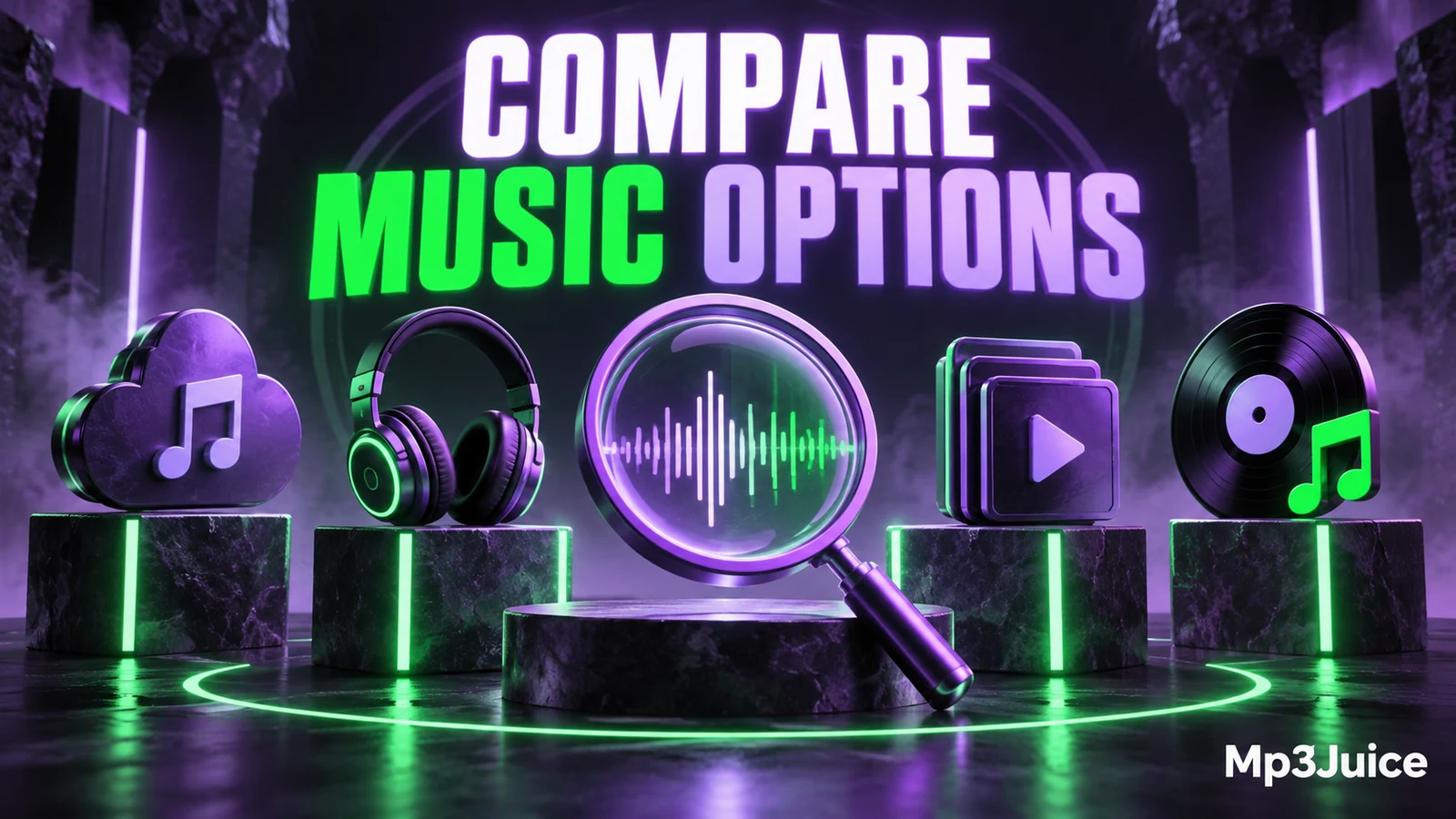
Compare Four Useful Categories
| Category | Useful for | Check before choosing |
|---|---|---|
| Licensed subscription listening | Convenient discovery and listening within an app | Catalog, offline conditions, renewal cost and device limits |
| Artist-authorized downloads or music stores | Obtaining files under stated download terms | Licence, file format, edition and available quality |
| Local music players and library managers | Playing and organizing files you already have | Supported codecs, tags, playlists and backup options |
| Browser search and conversion interfaces | Locating recordings or processing a supported source | Source permission, available formats, advertising and saved-file behavior |
These categories can complement one another. You might discover an artist through a subscription catalog, obtain a permitted download from the artist and play it in a local library. There is no requirement to force every stage into one website, and no reason to assume that one category is universally better.
Evaluate the Recording, Not Just Catalog Size
Having many search results is useful only if the intended version can be identified. Compare artist credits, release edition, live or studio wording and available previews. A large collection of similarly titled uploads can require more checking than a smaller, clearly labeled release catalog.
For a practical comparison, choose one recording you are authorized to access. Note its title, performer and version. Check how each candidate service presents those details. Do not compare unrelated songs on different services and attribute every difference to the tools themselves.
Also consider how missing results are handled. A useful interface should make it possible to refine a query or recognize that an item is unavailable. Promises that every recording is always accessible deserve scrutiny, especially when the page provides no clear explanation of its sources or permissions.
Check Formats Against Your Actual Player
Format labels matter when you intend to keep local files. MP3 is widely supported, while other audio formats may suit particular libraries or devices. An extension alone does not describe every encoding detail. Before moving a large collection, try one permitted file in the player you intend to use.
Compare like with like when listening. Keep playback volume similar and avoid judging solely from a bitrate number. A higher number cannot restore detail that was missing from the source recording. Read audio formats and device compatibility when compatibility is your main concern, or the MP3, M4A and AAC comparison for format distinctions.
A convenient website is not necessarily the best library manager. If you already own the files and only need sorting, cover art or playlists, changing the player may solve the problem without downloading the music again.
Consider the Full Cost of Access
Cost includes more than the price displayed beside a song. Account setup, recurring charges, data use, advertising interruptions and time spent resolving confusing results can affect the experience. For subscription products, check cancellation and offline-access conditions before paying.
For browser tools, consider the number and clarity of steps between the selected result and a saved file. Notice whether an advertisement opens separately and whether the browser shows a completed transfer. Do not enter payment information into an unrelated offer because you assume it belongs to the recording you selected.
There is no need to invent a numeric score for these observations. A short note such as “clear artist credits, ordinary MP3 file, confirmed download permission” is more useful than a five-star rating with no stated criteria.
Understand Supporting Tools on This Site
The MP3 Downloader and YouTube to MP3 pages are supporting service pages within this website. They present different starting points for related tasks. They should not be counted as independent companies or separate competitors simply because their page names differ.
If you already have a source link, a conversion-focused starting point may be convenient. If you know only a song and performer, a search-focused starting point may fit better. Either way, the right choice comes from matching the tool to the job and checking what access it actually provides.
For your own comparison, finish this sentence before choosing: “I need to obtain or play this recording on this device under these conditions.” That small specification keeps attractive design, broad catalog claims and familiar brand names from distracting you from the result you need.